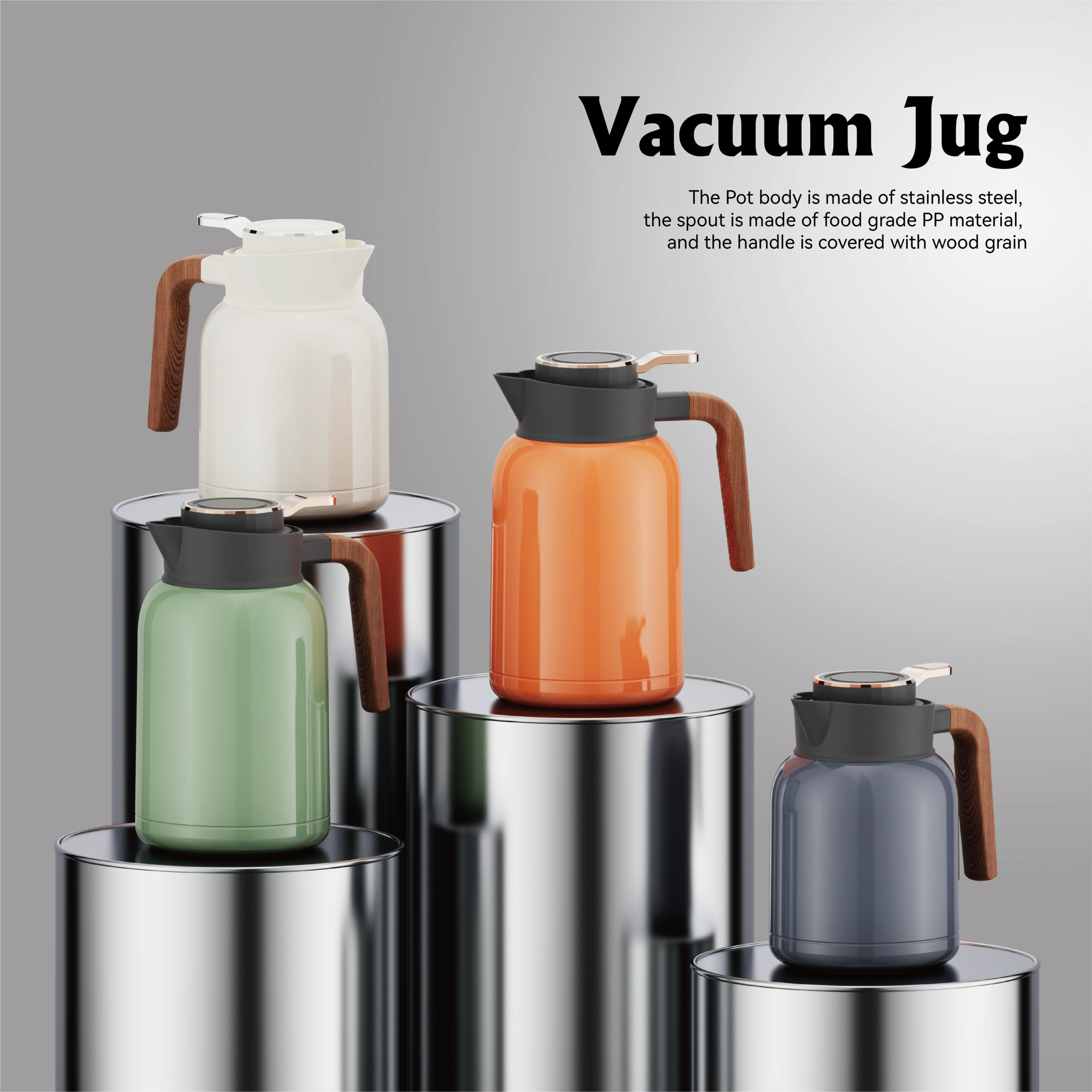
Running a coffee shop chain, stocking a restaurant supply business, or launching your own private-label line? Picking the right iron body coffee pot can make or break your margins—and your customers’ satisfaction. These pots aren’t just servers; they’re workhorses that need to hold temperature, resist dents, and pour cleanly shift after shift.
Buyers often overlook small details that turn a decent pot into a reliable one. Thin metal warps over time. Poor welding leaks. Handles that feel flimsy lead to spills and complaints. In wholesale and OEM deals, those issues multiply across thousands of units. Let’s break down what actually matters when sourcing high-quality iron body coffee pots.
Why Iron Body Coffee Pots Stand Out for Bulk Buyers
Iron body pots deliver that classic, rugged appearance many folks really like. Think old-school diner style or upscale café setups. The outer shell handles rough treatment. It doesn’t show wear right away. Plastic cracks pretty fast. Stainless scratches too easily. But iron gives real weight and a solid presence. It feels substantial in the hand.
Most good ones pair the iron shell with a glass liner inside. Glass won’t react with coffee’s natural acids. So the flavor stays fresh, cup after cup. No odd metallic taste creeps in. No worries about anything leaching out. Vacuum insulation sits between the layers. That keeps drinks hot or cold for 12–24 hours straight. That’s a big deal in busy mornings or during catering jobs.
In everyday use, a solid iron body coffee pot performs steadily. It shines at events where you can’t keep reheating every hour. One café owner switched to thicker iron models. He cut refills almost in half during rush times. That’s actual money saved on labor.
Key Factors to Evaluate Before Placing a Wholesale Order
Don’t rely only on pictures. Dive deeper into the specs. They decide long-term performance and safety.
Material Thickness and Durability
Thicker iron fights dents better. It also backs up heat retention nicely. Seek out bodies around 0.5–0.8 mm thick or even more. Anything slimmer bends too easily from normal kitchen bumps.
Thinner shells let heat escape quicker too. That shortens how long coffee stays really hot. Suppliers run tests. They show pots with decent thickness hold above 60°C longer. Cheaper ones drop below 50°C in half the time.
For wholesale buys, put thickness first. It directly lowers returns and warranty headaches.
Inner Liner Coating and Glass Quality
The glass liner inside should be food-safe and smooth. Some get a special coating. It fights stains and makes wiping clean much easier. Without that layer, coffee oils build up fast. The pot turns cloudy. It picks up off-flavors after a few months.
Better options use borosilicate glass. It’s tough against sudden temperature changes. You drop hot liquid into cold water? It cracks less often. Cheap glass breaks more readily. That means expensive replacements pile up.
Always push for food-contact certification on the liner. FDA-approved or similar keeps health inspectors off your back.
Welding Craftsmanship and Leak Prevention
Welds often become the weak point. Messy seams let water sneak in during washes. Tiny leaks ruin the vacuum over time.
Check for smooth, uniform welds. No obvious gaps or scorch marks. Reliable factories pressure-test each pot before it ships. In OEM runs, grab samples. Inspect the seams closely. Run hot water through and look for any drips.
One big buyer found out the hard way. A batch had uneven welding. It caused 15% leakage complaints in weeks. They switched to stricter controls. Complaints fell almost to nothing.
Handle Structure and User Comfort
Handles get slammed around. People lift, pour, bump them constantly. Weak plastic or loose metal ones crack or come off quickly.
Go for ergonomic shapes with heat-proof grips. Make sure they’re riveted or bolted securely to the body. Double-riveted handles survive years in high-traffic spots like hotels or busy offices.
Check the pour angle as well. A balanced pot pours cleanly. No drips run down the side. Messy pours waste product. They annoy customers too.
Food-Grade Certifications and Safety Standards
Never skip this step. Ask for clear proof that materials are food-safe. Especially the liner, stopper, and any plastic touching liquid.
Seek out LFGB, FDA, or comparable third-party tests. These show nothing harmful migrates into drinks. Even after lots of heating cycles. In strict markets, missing certs block shipments or spark recalls.
Trustworthy suppliers hand over full paperwork right away. If they drag their feet, walk away.
Spotlight: A Top-Performing Example
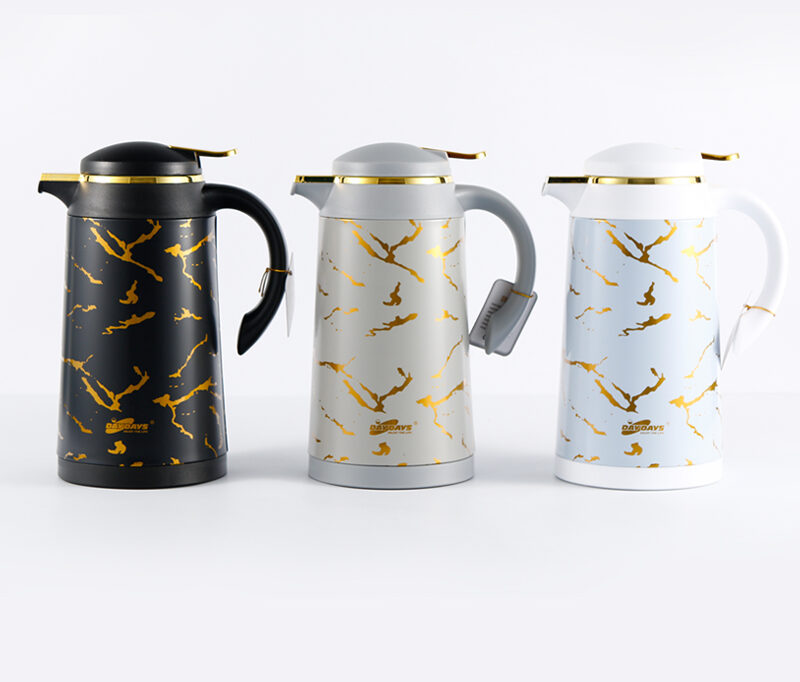
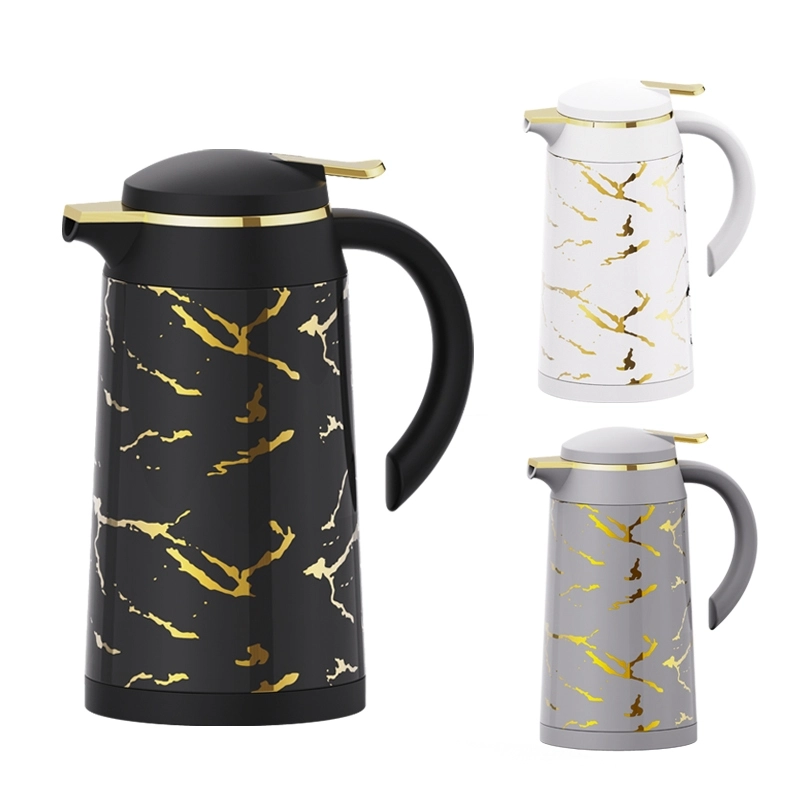
Consider Sunlife’s popular 1.0L metal body coffee pot with glass refill. It uses vacuum-insulated design. The marble-patterned iron exterior looks sharp. Construction holds up to daily heavy use.
- Capacity: 1.0L—great size for medium-volume spots without feeling too big.
- Heat retention: Keeps drinks hot or cold 12–24 hours.
- Body: Tough metal (iron-style) shell with attractive marble finish. It hides small scratches well.
- Liner: High-quality glass refill preserves clean coffee taste.
- Customization: Perfect for OEM—add logos, change colors, tweak packaging. MOQ starts at 3600 pieces, standard for wholesale.
Buyers pick it often. It mixes old-school iron toughness with up-to-date vacuum tech. No flavor issues. Easy to wash. Looks great on counters.
About Zhejiang WeiLai Daily Necessities Co., Ltd
Zhejiang WeiLai Daily Necessities Co., Ltd (they run brands like Sunlife and Veley) started back in 1996. They’re based in Yiwu, the small-commodities hub. The company handles development, manufacturing, and worldwide sales. Their lineup includes thermoses, vacuum flasks, coffee pots, air pump pots, and similar items.
They manage four international brands. Exports reach over 100 countries. With 200+ ready-to-ship stock items and fresh designs every couple months, they’re set up well. They handle fast wholesale turns plus custom OEM/ODM work. Customization includes logos, colors, patterns, and packaging—whatever helps build a strong private label.
Conclusion
Picking the right iron body coffee pot for wholesale or OEM goes beyond the lowest price. It’s about features that deliver steady results. Those protect your profits too. Pay close attention to thickness, clean welds, sturdy handles, safe materials, and solid heat holding. Get those right. You’ll see fewer returns. Customers stay happier. Your reputation grows for dependable gear.
Team up with proven suppliers. They offer real testing and flexible options. The rewards come through fewer problems and more repeat business.
FAQs
What makes an iron body coffee pot better for wholesale than stainless steel versions?
Iron bodies give a heavier, premium feel that many customers associate with quality. Paired with glass liners, they avoid metallic taste issues and hold up well to daily knocks—great for busy cafés or offices buying in bulk.
How thick should the iron body be to avoid denting in commercial use?
Aim for at least 0.5–0.8 mm thickness. Thinner shells dent easily during transport or service, while thicker ones stay looking new longer and support better insulation performance.
Does the glass liner in iron body coffee pots need any special coating?
A decent coating resists coffee stains. It simplifies cleaning a lot. Food-grade, non-reactive glass (often borosilicate) keeps flavors pure. No strange tastes show up even after heavy months of use.
What certifications should I demand for food safety in OEM orders?
Push for FDA, LFGB, or similar third-party tests on food-contact parts. These confirm materials stay safe. Nothing harmful leaches out. That’s key for health rules and avoiding risks.
How long can a quality iron body coffee pot keep coffee hot?
Top ones with vacuum insulation hold drinkable temps (above 60°C) for 12–24 hours. Actual results shift with fill amount and room conditions. Still, that’s the standard for trustworthy wholesale stock.